Tight and Stuck: What Assisted Stretching in Thai Massage Actually Does
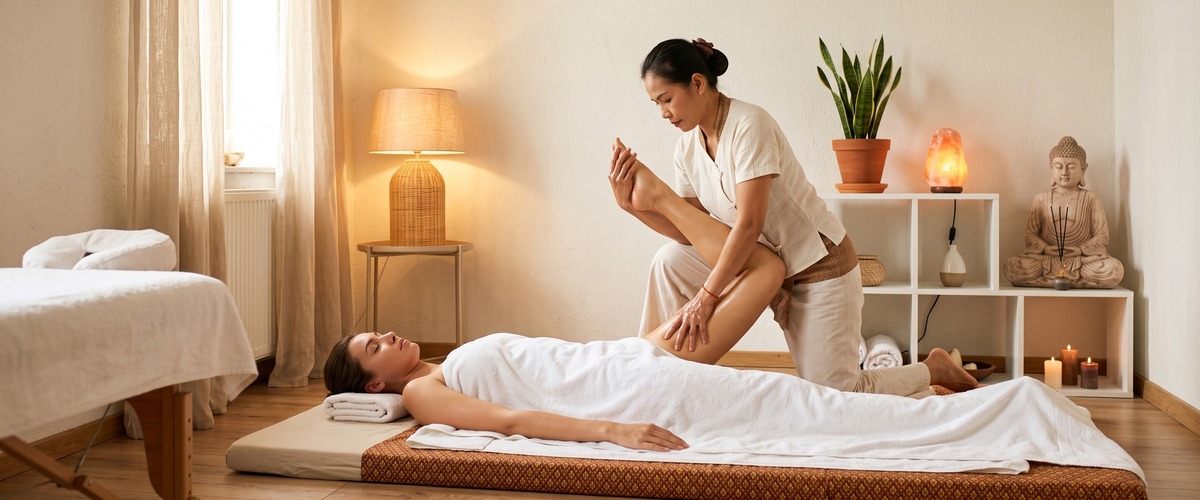
Assisted Stretching in Thai Massage: Why Glasgow Clients Feel Tight and Stuck
Most people assume a “tight” muscle is a short muscle, one that’s physically seized up and needs to be pulled loose. Assisted stretching in Thai massage works from a different premise. The tightness you feel is frequently your nervous system holding a brace pattern, not your muscle fibres actually shortened, and that distinction changes what a session should be trying to do.
Here is what really happens in the tissue and the nervous system when a therapist guides you through a stretch. You will see why that differs from stretching alone. And you will know what to expect if you book an assisted stretching session in Glasgow.
How Assisted Stretching Differs From Passive Stretching in Traditional Thai Massage
Traditional Thai massage is known in Thailand as Nuad Boran. It blends acupressure along the body’s sen lines with steady, rhythmic pressure and guided stretching.
The Wikipedia article on Traditional Thai massage describes the same approach. Sen lines are the pathways a therapist works along with thumbs, palms, and forearms. They do this before moving a limb or joint into a stretch.
The “assisted” part matters more than it sounds. When you stretch yourself, your nervous system does two jobs at once. It starts the movement. It also checks how far is safe to go.
A therapist takes over the first job. That frees your nervous system to focus only on the second. Often that alone lets a joint move further than it can on its own.
This is also where it parts ways with a static stretch you hold at your desk. A held stretch reaches one fixed point and stops. Assisted stretching is closer to PNF, the contract-then-relax method, except the therapist controls the timing and feels your guarding ease before easing you further.
What Assisted Stretching for Tight Muscles Feels Like in Glasgow, Scotland
At Serendipity Massage Therapy & Wellness in Glasgow, Scotland, an assisted stretching session moves through a set of positions. These include hip openers, spinal twists, and shoulder and neck holds.
The therapist holds each one and reads how your body responds. There is no fixed script. You can book a session online and feel the difference between this and stretching on your own.
The Real Reason Muscles Feel Tight: A Nervous System Signal, Not Just Shortened Tissue
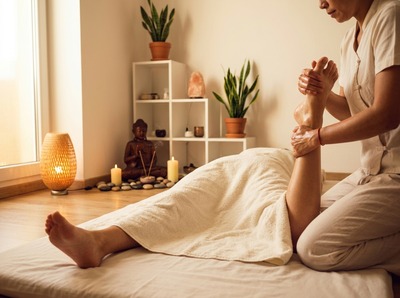
Research backs this up. One review looked at how hard people stretched. It found that the nervous system, not just the muscle, changed during a stretch.
Heart rate, blood pressure, and stress markers all shifted alongside the flexibility gains. You can read the research published on PubMed.
Other work looks at stretch tolerance. This is the point where your brain lets a joint keep moving. It suggests that flexibility gains often come from that moving limit, not from the muscle fibre getting any longer.
Jariya Malone, Serendipity’s head therapist, sees this pattern constantly. “I often see clients tense up the moment they lie down, shoulders up around their ears, jaw clenched,” she explains. “By the end of the session, when they realise their body has been holding tension they didn’t even know was there, something shifts.”
That shift is the nervous system standing down its guard. It is not a muscle being pulled longer.
What Assisted Stretching Actually Changes: From Sen Line Work to Stretch Tolerance
Because the therapist moves the joint, not you, your body can be guided past the point your own brain would call a halt. Add acupressure along the sen lines, and this is what sets assisted stretching apart from deep tissue work.
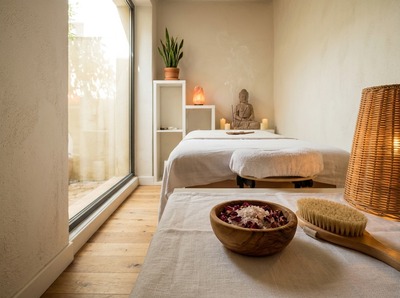
Deep tissue eases tension by working right into muscle and fascia. Assisted stretching works on the guarding pattern around a joint.
Many clients who book a Thai Deep Tissue Oil Massage in Glasgow arrive with tightness from their work. Golfers often carry it through the back and shoulders. So do people who lift and labour all day.
Both are common at Serendipity. The stretching work is shaped around whichever problem area holds the most guarding that day.
Jariya recalls a client who assumed Thai massage was “just stretching.” “When I showed them how the acupressure work was targeting specific tension patterns in their neck and shoulders, releasing restrictions they’d held for years, they understood it was therapeutic work, not relaxation theatre,” she says.
Regular clients notice the difference too. The knots in the shoulders and neck are the tension people mention most, and reviews of Serendipity describe those knots as gone after treatment. Clients also name their therapist, whether Jariya or Karolina, and stay loyal to how that person listens and works the exact spot rather than running a generic routine. That same tailored approach is what makes assisted stretching work.
Is Assisted Stretching Safe? What to Expect and Who It Helps
Assisted stretching is shaped around where your body actually is, not where you wish it was. So limited mobility, a past injury, or a joint condition like arthritis does not rule it out.
A trained therapist reads how a joint responds and works within what is safe. They ease off the moment resistance turns into strain, rather than pushing through it.
You should feel a strong stretch, not pain. If a hold starts to hurt instead of release, say so.
The therapist adjusts the position. That feedback is part of the treatment, not a break from it.
In Glasgow, this work draws a wide range of people. Office workers come in when their hips and shoulders seize up at a desk.
Outdoor types come in too. They spend weekends hillwalking or bagging Munros near the city. They need hamstring and calf work before the next long walk.
It is also popular with members of Glasgow University’s Thai boxing club and other combat sports groups around the city. For them, hip and shoulder mobility is part of the training.
If tightness has been building for a while, Traditional Thai Massage is the service built around assisted stretching and sen line work. You can book your session and start working with your nervous system instead of against it.