
Foot Massage for Standing All Day: A Recovery Guide for Glasgow's Chefs Carers and Hairdressers
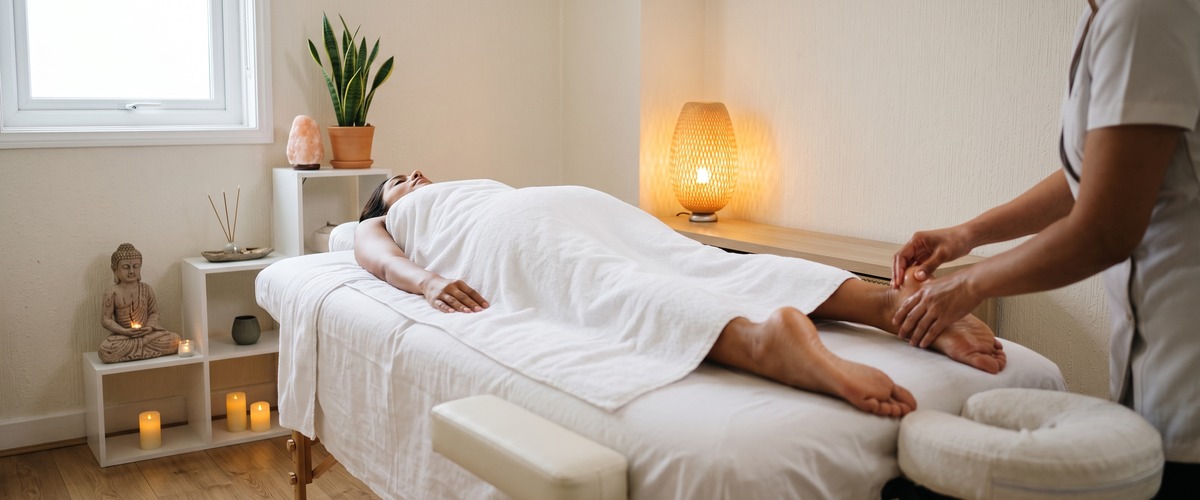
By hour nine of a shift, the ache stops feeling like muscle and starts feeling like bone. Chefs standing over a hot pass, carers walking ward corridors for twelve hours straight, hairdressers rooted to one spot through a full colour and cut: these are the people who tell us, session after session, that their feet gave out before their energy did. At Serendipity Massage Therapy & Wellness in Glasgow city centre, this is one of the most common complaints we hear, and it’s rarely framed as a request for pampering. It’s framed as “how do I get through tomorrow’s shift too.”
That’s the gap this guide is built to close. Foot massage for standing all day isn’t a treat you save for a spa weekend. For people whose job is physically standing, it’s closer to servicing a piece of equipment you rely on every single day.
Foot Massage for Standing All Day: Why Chefs Carers and Hairdressers Feel It Most
Not every standing job loads the feet the same way, and that’s exactly why a generic “put your feet up” article misses the point. The pattern of ache a chef describes is different from what a carer or a hairdresser brings in, and treating them the same wastes the session. You can book a session online once you know which pattern fits you.
The Kitchen Line, the Ward Floor and the Salon Chair
Chefs spend a shift pivoting between a hot stove and a prep bench in rigid, non-slip clogs, which loads the forefoot and calves hard. Carers cover long distances across wards and stairs, often on irregular or overnight rotas that never let the feet properly reset. Hairdressers, by contrast, are usually static for long stretches, standing at one basin or chair with their weight quietly shifted onto one hip and one foot for an entire cut.
In our experience the salon stance is the one clients underestimate most. They assume standing still is easier on the feet than walking a ward. It isn’t. Weight parked on one side for hours loads the same arch and calf over and over, and that steady, one-sided pressure is what we end up working out.
Jariya Malone, Serendipity’s head therapist, sees the carer pattern often. She has worked with shift workers whose sleep felt fragmented and unrestorative from irregular hours, and found that once they settled into a regular fortnightly massage rhythm, their sleep noticeably deepened within a month. Tired feet and a wired nervous system usually arrive together, not one after the other.
What Reflexology-Based Thai Foot Massage Actually Does for Tired Feet
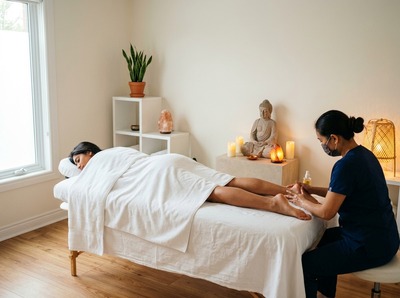
Thai foot massage is a reflexology-based treatment that combines thumb pressure and a wooden stick worked along reflex points on the sole, plus broader strokes up the arch and calf. It targets the fluid buildup, reduced circulation and joint stiffness that settle into the feet after hours of standing. The NHS notes that massaging your feet improves circulation and relieves sore joints and muscles, which is exactly the mechanism at work here rather than anything mystical.
This is also where the framing matters most. Spa-hotel foot treatments around Glasgow price a twenty-five-minute foot rub from around £60, positioned as a small indulgence. We build it the other way round. For a chef or a carer, a foot session is occupational maintenance, the same way a joiner services their tools. Serendipity’s approach to Thai foot massage is a targeted recovery treatment for people whose job depends on their feet holding up, not an add-on to a relaxing afternoon.
You can also book your appointment online directly for a foot-focused session rather than a full-body one, if that’s what a shift week actually calls for.
How Often Should You Get a Foot Massage When You’re on Your Feet All Day?
This is the question we get asked most, and the honest answer is that one session rarely holds for long if the job that caused the problem hasn’t changed. For someone dealing with daily foot and calf fatigue, weekly sessions for the first month tend to break the pattern, moving to fortnightly once things ease. After that, monthly maintenance usually keeps the soreness from building back up.
One recent five-star review described a construction worker whose manual labour was straining his muscles until a Deep Tissue Thai Oil Massage session with Jariya “worked wonders” on his neck and shoulders. The pattern for feet under a chef’s clogs or a carer’s shift shoes is the same story lower down the body: repetitive strain that responds to regular, targeted work rather than a single fix. Ailsa W., a regular client, put it plainly in her own review: Jariya “takes time to understand what you need and tailors the massage perfectly,” which matters more for occupational strain than a generic routine ever could.
Stretches Footwear and Small Fixes Between Sessions
Between appointments, a few simple habits do a lot of the maintenance work. Calf raises against a wall, and rolling the sole of your foot over a tennis ball for a minute or two after a shift, both help keep circulation moving. If you can manage it, five minutes with your feet raised above hip height at the end of the day reduces the swelling that builds up from standing.
Footwear matters just as much as any stretch. The NHS’s general guidance on foot pain points to shoes with plenty of room, a low heel and a soft sole, and that holds whether you’re in chef’s clogs, ward-approved trainers or salon flats. If a shoe’s sole has visibly compressed, it has stopped supporting you long before it looks worn out, so replace it rather than waiting.
Know when to stop self-managing, too. Sharp heel pain, a worsening bunion, or numbness that doesn’t settle overnight are signs worth taking to a GP or podiatrist rather than a massage table.
Standing all day for a living wears feet down in specific, predictable ways, and the recovery has to match the job, not a generic wellness list. Whether it’s a chef’s forefoot strain, a carer’s overnight rota, or a hairdresser’s one-sided stance, regular foot massage works the same way a service schedule works on anything else you rely on daily: it catches the wear before it becomes a sick day.