
How to Use a Foam Roller Between Massage Appointments
How to Use a Foam Roller Between Massage Appointments
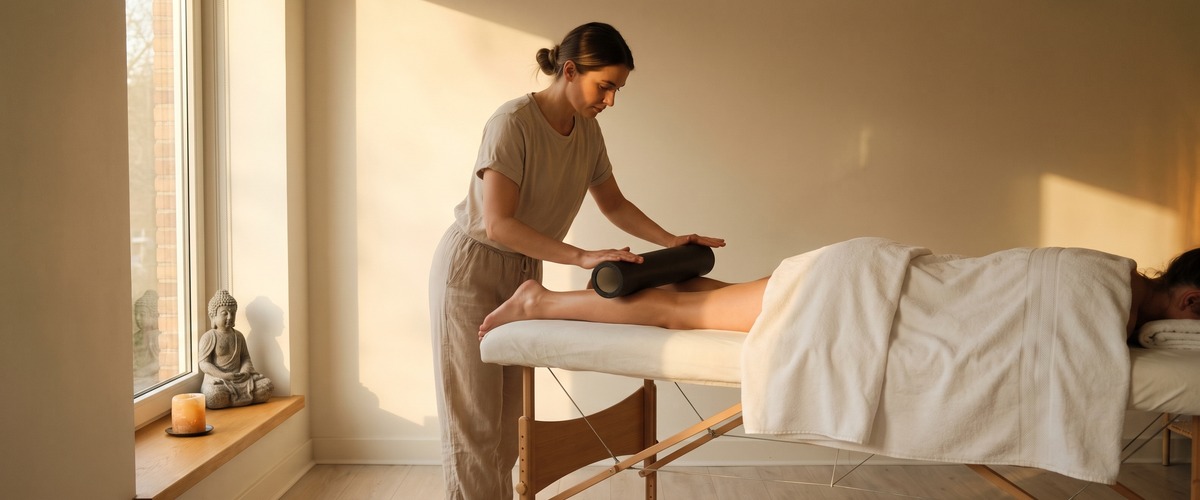
The safest way to use a foam roller between massage appointments is light, short sessions on muscle that isn’t currently inflamed, saving anything firmer for the 24 to 48 hours after a deep tissue session has properly passed. That timing detail is the part most foam rolling guides skip, and it’s the difference between a habit that extends your massage results and one that quietly undoes them.
Most advice on foam rolling treats it like exercise: more frequency, more pressure, more benefit. That instinct is broadly right for muscle that’s simply tight or under-used. It’s the wrong instinct in the day or two after a deep tissue massage, when the tissue your therapist worked is still in an active repair phase, and grinding a hard roller through it can undo the very relief the session gave you.
At Serendipity Massage Therapy & Wellness, we see foam rollers as a genuinely useful bridge between visits, not a replacement for the table. Used at the right time on the right tissue, they help maintain what a session builds. Used the wrong way in the wrong window, they can set you back.
Self-Myofascial Release: Why Foam Rolling Works Between Sessions
A foam roller works through self-myofascial release: gentle, sustained pressure applied through the fascia, the connective tissue web that wraps every muscle, encouraging it to loosen and glide rather than stay stuck. It won’t replace the targeted pressure and assessment a trained therapist brings, but it keeps the gains from your last session from fading as quickly.
Cleveland Clinic notes that foam rolling can genuinely reduce muscle soreness and tension between workouts or treatments, largely through this mechanism. For anyone having regular traditional Thai massage, which combines acupressure and assisted stretching along the body’s sen lines to release built-up tension patterns, a roller at home extends that work into the days either side of an appointment.
You can book your next session online and treat the roller as maintenance in between, rather than asking either one to do the other’s job.
The 24 to 48 Hour Rule After Deep Tissue Work
This is the part that matters most. If you’ve just had a Thai Deep Tissue Oil Massage or any firm-pressure treatment targeting a specific knot or area of muscle tension, that tissue is inflamed in the useful sense. It’s actively repairing, and it needs that window undisturbed.
Research supports this. A 2015 study in the Journal of Athletic Training found that foam rolling after exercise noticeably reduced delayed-onset muscle soreness and helped restore strength and power in the days that followed. That benefit came from appropriately timed, moderate pressure, not from rolling immediately and aggressively over freshly worked tissue.
Jariya Malone, Serendipity’s head therapist, sees the cost of getting this wrong regularly. She recalls a runner who came in mid-training with calf tightness affecting their gait: the fascial restrictions and compensation patterns needed careful work on the table, not more pressure piled on at home the same evening. Two sessions later, once the tissue had time to settle properly between visits, the runner had a personal best on their 10K to show for it.
Give any area of firm deep tissue work 24 to 48 hours before you roll it with real pressure again. Everywhere else on your body is fair game the same day.
How to Foam Roll Between Massage Appointments Without Overdoing It
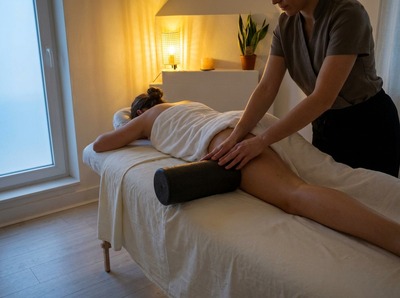
Keep sessions short. Somewhere between 60 and 90 seconds per muscle group is enough to get a benefit, and holding pressure on one spot much longer than that tends to aggravate the tissue rather than release it.
Roll slowly, pause on genuinely tender spots for a few seconds, and breathe through it rather than tensing against the roller. One question we hear constantly in the treatment room is whether it’s supposed to hurt this much. The honest answer is that you should feel pressure and sometimes intensity, but your body should be relaxing into it, not bracing against it.
If a spot makes you brace rather than settle, ease off. That instinct applies just as much with a roller in your living room as it does on the table.
How Often Should You Foam Roll Between Massage Sessions
For most people managing ordinary desk tension or training soreness, two to three short sessions a week is a sensible baseline between massage appointments. Athletes in a heavy training block may benefit from rolling more often, and anyone with an area that’s been firmly worked in the last two days should do it less, or not at all, there.
If you’re a Serendipity client working a desk job in Glasgow city centre, perhaps around Hope Street or Blythswood Square, the areas that respond best to a quick roll are the upper back, calves and outer hips: the spots that stiffen from sitting rather than moving. Frequency isn’t the lever that gets you results. Timing and pressure are.
When to Put the Roller Down Entirely
Skip the roller altogether over bruising, swelling, varicose veins, or any area that’s sharply painful rather than simply tight. Those aren’t cases for more self-treatment. They’re a reason to mention it at your next appointment instead.
A little discomfort that eases as you roll is normal. Pain that makes you flinch, or that stays sharp afterwards, is your body telling you to stop, not to push through.
Used well, a foam roller genuinely stretches the value of a massage appointment into the days around it. Used carelessly, especially straight after firm treatment, it just gives your body more work to do when it’s already busy repairing. The one detail worth remembering is the 24 to 48 hour rule: light and frequent on settled muscle, patient on anything freshly worked. If you’re ever unsure whether an area is ready for pressure, that’s exactly the kind of thing to raise at your next visit, whether that’s a deep tissue oil massage or a traditional Thai session.
image_briefs:
- pose: supine setup: floor-mat scene: The client lies on a mat at home in loose clothing, using a foam roller positioned beneath one calf, working through tightness between massage appointments. props: foam roller, yoga mat
- pose: people-free scene: A foam roller and folded towel rest untouched beside a small clock, representing the rest period recommended right after a firm deep tissue session.
- pose: seated setup: floor-mat scene: The client sits on a mat, calmly rolling the upper back against a foam roller with controlled, unhurried movement. props: foam roller
- pose: people-free scene: A foam roller and amber massage oil bottles arranged neatly on a wooden shelf in a calm treatment room. props: foam roller, oil bottles, folded towels
Found this useful? Add serendipitymassage.co.uk as a preferred source on Google so our latest guides show up first for you in Search and AI Overviews.