Great Scottish Run 2026: The City-Centre Recovery Plan for Half Marathon and 10K Finishers
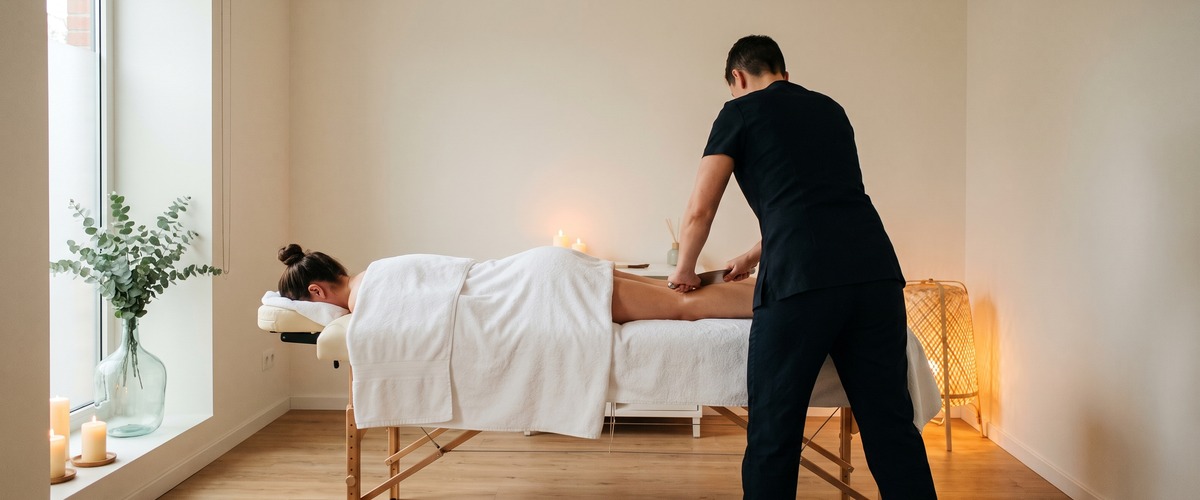
Your Great Scottish Run 2026 Recovery Plan Starts on Glasgow Green
The fastest way to recover from the AJ Bell Great Scottish Run 2026 starts within five minutes of crossing the finish line, not once you’re home with the medal round your neck. Because both the half marathon and the 10K start on St Vincent Street and finish on Glasgow Green on Sunday 4 October 2026, the whole race sits inside Glasgow’s city centre, and so does the recovery window that follows it.
That’s the piece most “how to recover from a half marathon” guides miss. They assume you’re driving home to ice a knee on your own sofa, when most Great Scottish Run finishers are a short walk from a hot shower, a proper coffee, and a massage table. This is a timeline built for that: what to do in the first five minutes, what to do over the following 24 hours, and why the massage you book for 48 hours later should be gentle, not the deep tissue session you might be tempted to ask for.
The First Five Minutes: Don’t Sit Down Yet
It’s tempting to collapse onto the grass the second you’re through the finish funnel. Resist it for a few minutes. Gentle walking keeps blood moving back toward your heart instead of pooling in your legs, which is exactly what your circulation needs after 10K or 13.1 miles of hard effort.
Layer up quickly. A Glasgow October morning sits around 10°C at race time, and a sweat-soaked t-shirt cools fast once you stop moving. Grab water and something with a bit of sugar and salt in it from the finish festival before you start the walk back into town, because that’s when delayed onset muscle soreness, the stiffness and tenderness that builds over the next day or two as muscle fibres repair themselves, really starts to take hold.
Post-Race Massage in Glasgow: Why Light Beats Deep in the First 48 Hours
Here’s where most runners get it wrong. In our experience, the finishers who come in the day after a race are the ones most likely to ask for the deepest, hardest session on the menu, and it’s almost always the wrong call. Deep pressure without reading what the tissue actually needs wastes the session, and straight after a half marathon or 10K, your muscle fibres are inflamed and genuinely micro-damaged, not just tight. Digging in hard at that stage doesn’t speed anything up. It just adds fresh irritation to tissue that’s already busy repairing itself.
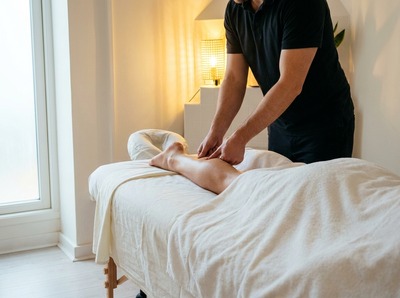
What works instead is light, flowing massage: long effleurage strokes that support lymphatic drainage and circulation rather than forcing their way into knots that aren’t ready to be worked yet. A Thai Oil Massage, which uses flowing strokes and therapeutic oils rather than intense targeted pressure, is a good fit for this stage. The evidence backs the general approach up: a widely cited systematic review of massage and exercise recovery found soreness ratings were measurably lower at both the 24 and 48 hour marks in runners who received massage compared with those who didn’t.
If you want to book a session online for the days after the race, that’s the window to aim for. Hope Street, where Serendipity is based, sits right where St Vincent Street begins, so it’s practically at the start line and a flat 15 to 20 minute walk from the Glasgow Green finish.
How to Recover After a Half Marathon Once the Soreness Peaks (24 to 48 Hours)
Soreness usually peaks between 24 and 48 hours after the race, which is also roughly when it’s safe to start asking for more targeted work. Jariya Malone, Serendipity’s head therapist, has seen this pattern play out in training cycles, not just on race day. A runner once came to her mid-training with calf tightness that was throwing off their gait, and after two sessions working through the fascial restrictions and the compensation patterns their body had built up, they knocked a personal best off their 10K time.
That’s the case for treating recovery as more than a one-off. Once the acute soreness from the Great Scottish Run has settled, a Thai Deep Tissue Oil Massage can work into the specific tension patterns that six miles of uphill running in the middle of the half marathon course, or the sharp downhill start of the 10K, tend to leave behind in calves, hamstrings and the lower back. It’s a different job to the flush work you want on race day itself, and doing them in the wrong order is the mistake most finishers make.
A Simple Recovery Checklist for City-Centre Finishers
- Keep walking for 10 to 15 minutes after you finish, don’t sit straight down
- Rehydrate and eat something with carbohydrate and protein within the hour
- Layer up fast, especially if you’re waiting around Glasgow Green for friends or family
- Book a light, flowing massage for 24 to 48 hours later, not the same afternoon
- Save deeper work on specific tight spots for a few days after, once soreness has eased
Recovery from the Great Scottish Run doesn’t need a training plan of its own, but it does need the right thing done at the right time. Get the sequence right, from the first five minutes on Glasgow Green through to a properly timed massage 48 hours on, and you’ll be back to normal walking, sitting, and climbing stairs without wincing far sooner than if you’d gone straight for the deepest massage on the menu.
Found this useful? Add serendipitymassage.co.uk as a preferred source on Google so our latest guides show up first for you in Search and AI Overviews.